
Latest News
All the latest news, views and industry insight from Casserly Property Management…

Legionella Management in Schools:
Safeguarding Your Students and Staff
Legionella management in your school isn’t only important to you, your students and your staff, it’s also an area of statutory compliance governed by a number of different regulations.
Today we’re going to take a look at what legionella is, why legionella management is important, the applicable regulations and how you can effectively manage the risk of legionella in your school.
What is Legionella?
Legionella is a type of bacteria commonly found in natural water systems such as lakes, rivers, and ponds. However, it can become a significant health risk when it grows in purpose-built water systems like those found in schools, nurseries, and colleges. These systems often maintain water temperatures between 20°C and 45°C - ideal conditions for Legionella growth.
The bacteria can spread through aerosols or droplets generated by taps, showers, air conditioning units and other water outlets. Inhalation of these contaminated droplets can lead to Legionnaires' disease, a potentially severe form of pneumonia.
Key factors that increase the risk of Legionella include:

-

Water temperatures suitable for bacterial growth (20–45°C).
-
The presence of breathable water droplets (e.g., from showers or cooling towers).
-
Deposits such as rust, sludge, scale, or biofilms that provide nutrients for bacteria.

Why is Legionella Management Important for Schools?
Schools are responsible for the health and safety of their students, staff, and any visitors to the school. An outbreak of Legionnaires' disease can have serious health consequences and far-reaching legal implications.
As with many illnesses, young children, the elderly, and individuals with weakened immune systems are particularly vulnerable to infection from legionella. Ensuring the safety of water systems is not only a legal obligation but also a critical step in protecting public health within all educational institutions.
The Regulations Applicable to Legionella Management
In the UK, there are several regulations that govern legionella control in schools:
-
Health and Safety at Work Act 1974: Requires employers to ensure the health and safety of employees and others who may be affected by their activities.
-
Control of Substances Hazardous to Health (COSHH): Mandates the management of risks associated with hazardous substances like Legionella.
-
Approved Code of Practice (ACOP) L8: Provides guidance on controlling Legionella in water systems.
-
HSG274 Guidance Document: Offers detailed instructions on managing water systems to prevent bacterial growth.
These regulations place a duty on employers, building owners, facilities managers, and school governors to assess risks and implement appropriate control measures.
Managing the Risk of Legionella
To effectively manage legionella risks in schools, the following steps are essential:
-
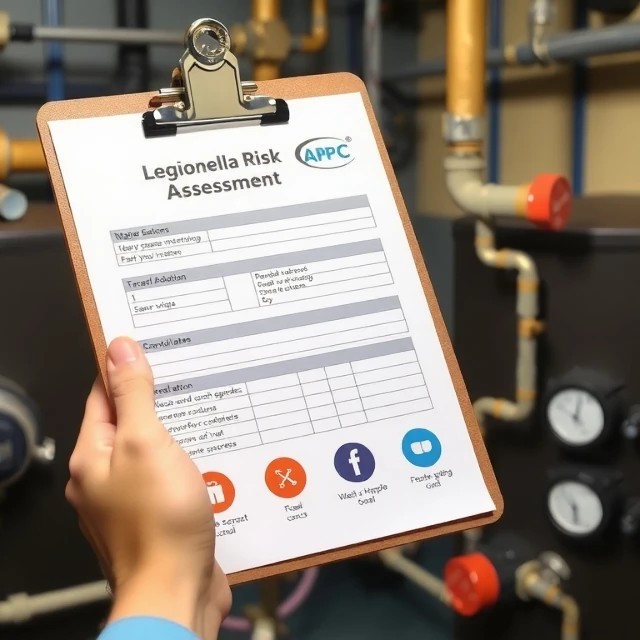
Conduct a Legionella Risk Assessment
- Engage a qualified risk assessor to evaluate potential risks in your water systems.
- A comprehensive assessment ensures compliance with legal requirements and identifies necessary preventative actions.
-
Implement Planned Preventative Maintenance (PPM)
Regular maintenance is critical to minimizing risks. Key activities include:
- Temperature monitoring.
- Descaling showerheads and spray equipment.
- Inspecting water tanks and expansion vessels.
- Maintaining calorifiers (water heaters) and thermostatic mixing valves (TMVs).
- Conducting routine water sampling.
-
Carry Out Remedial Works
Address issues identified during risk assessments or maintenance visits. This may involve:
- Cleaning and disinfecting water systems.
- Removing "dead legs" (unused pipe sections where water stagnates).
- Replacing faulty TMVs or upgrading outdated systems.
-
Provide Training
Ensure that staff involved in Legionella control are adequately trained through tailored courses such as:
- Legionella awareness training.
- Responsible person training.
- Practical training for system maintenance.
In Conclusion
Legionella management isn't just a box-ticking exercise – it’s a vital component of school Health & Safety. By following these steps, your school can significantly reduce the risk of a legionella outbreak while ensuring full compliance with your legal obligations.
For school facility managers, understanding the importance and requirements of legionella management is integral to ensuring that the learning environment you provide remains secure, legally compliant, and free from avoidable risks.
If you have any questions about whether your school has a valid and up-to-date Legionella Risk Assessment in place, don't hesitate to reach out to your designated Facilities Manager, if you have one.
Alternatively, for further advice or support regarding Legionella management, you can also book a Free Consultation with me using the button below.
This article covers one of 31 different areas of compliance that affect schools and that we cover within our School Planned Maintenance Service (not all 31 areas apply to every school).
You can download our Free School Building Compliance Checklist with full details of the 31 areas of compliance we cover here.

Best wishes,
David
David Loxam
Casserly Property Management
P.S. If you've found this article interesting, informative or useful in any way, please share it using the following links. And I'd love to hear your thoughts, as well. Just leave your comments below. Thank you.

More

Introducing Our Customer Referral Programme
Today, I’m excited to be introducing our Customer Referral Programme, which we decided to refer to, quite simply, as the Casserly Referral Programme. Not overly imaginative, I know. But it does what it says on the tin! We’re extremely fortunate in that we receive a great deal of very positive feedback from our clients…
How Do You Know When You’re Doing A Great Job With That New Service?
It wasn’t too long ago that we introduced a new service – although, not before we’d thought long and hard about it. But how do you know when you’re doing a great job’? The service in question was our Reactive Maintenance Service. It made sense to us that this new service, one that specifically…

And a Great Time Was Had By All
A great time was had by all at the 2025 Education Today Awards Gala Dinner, which was held on the evening of Friday 5th December at the fabulous Riverbank Park Plaza Hotel in London. After last years’ success, we were very privileged to be a finalist, once again, in 2025 and this year it was…

The 2025 Education Today Awards for Schools and Suppliers – We Are Finalists!
Thank You ….. Thank You ….. Thank You! After winning an award at the 2024 Education Today School & Supplier Awards (see the photo of Amie and I receiving the award), we were delighted to be nominated again, in 2025. After posting, recently, about being nominated – and appealing to you to take a little…

The 2025 Education Today Awards for Schools and Suppliers: Can You Help?
2024 was a great year for us when it comes to awards, with success in both the 2024 Education Today Awards and the 2024 ACE Awards. You can imagine how thrilled we are to discover that we’ve been nominated once again for the 2025 Education Today School & Supplier Awards. According to their website, the…

PAT Testing in Schools: Ensuring Safety for Your Students and Staff
Electrical safety is a critical aspect of maintaining a secure and productive learning environment in schools. Portable Appliance Testing (PAT Testing) plays a vital role in ensuring that electrical equipment used by staff and students is safe and functional. This blog post explores the importance of PAT testing in schools, best practices, and how…
Fire Risk Assessment in Schools: Ensuring Safety and Legal Compliance
Fire safety is a critical aspect of school management, here in the UK, where the safety of pupils, staff, and visitors should always be a top priority. In fact, schools have a duty of care to protect children, who may not fully comprehend the dangers of fire. Conducting a thorough fire risk assessment in schools is…
Electrical Installation Condition Report (EICR) Testing in UK Schools
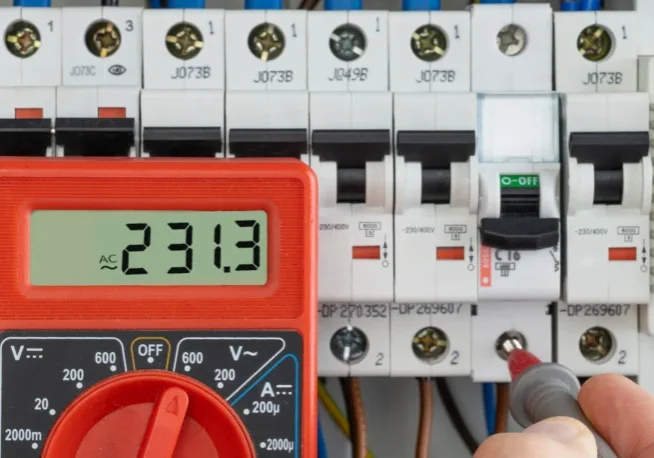
In the UK, ensuring the safety of students and staff is a fundamental responsibility for every school and the safety of school buildings plays a vital part in that. One critical aspect of school safety that can easily go unnoticed is the condition of electrical installations. Electrical Installation Condition Report (EICR) testing is essential to…

School Building Compliance Without Compromise Article: Education Today
We’re so excited to see our very own David Loxam’s article ‘School Building Compliance Without Compromise’, published in this month’s edition of the Education Today Magazine. Congratulations David. You can see the online version here and we’ve also added his article in full, below, as it’s a little easier to access and read.…

Education Today School and Supplier Awards Winners 2024
After some wonderful successes in 2024, what with various award nominations, being Highly Commend in the 2024 ACE Awards and significantly smashing through the 100 School Clients barrier (we now work with more than 130 schools), we’re delighted to draw 2024 to an exciting close by announcing that the icing on the ‘2024 Success Cake’…
We Can Help
Let us take the stress out of managing your property. To discuss your requirements, or arrange a no-obligation proposal…